Washing
Book / Produced by partner of TOW
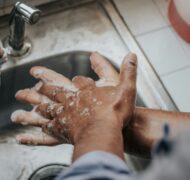
Washing ourselves is one of the most basic human actions. Apart from eating and drinking there is nothing more fundamental to our survival and association. Unless we wash regularly, we open ourselves up to sickness and disease; unless we wash, we also make it difficult for others to draw close to us and enjoy our company. For this reason washing has always been regarded as an important social as well as personal activity.
In many cultures, as in biblical times, guests entering a home were provided with a pitcher of water to wash their hands and with someone to wash their feet. This was not only a Jewish but also an early Christian custom (Mark 7:3-4; 1 Thes. 5:10). Such actions were viewed as an act of welcome and service, as well as a sign of holiness for some. Other ceremonies, such as the washing of one’s hands as an expression of innocence (Psalm 73:13), as a public sign of dismissing a situation (as did Pilate in Matthew 27:24) or as an attempt to relieve guilt (compare Lady Macbeth), also came into being.
Some of these rituals still survive, if in a different form. For example, we do often ask visitors, especially if they have traveled some distance, whether they would like to use the bathroom (see Hospitality). We still use the language of “washing our hands” of something or someone. Obsessive people also sometimes wash themselves compulsively, and increasingly parents have become preoccupied with their children’s cleanliness.
Across cultures and through the centuries, ways of washing and standards of cleanliness have varied. It is only in recent times that washing oneself has become a daily, or more than daily, affair. Until living memory in the West most people could only have a bath once a week. The general rise in living standards enabling every home to have a bathroom, and in particular the invention of the shower, dramatically changed methods and expectations concerning washing. Modern advertising elevates personal cleanliness to a position similar to that accorded it by the Pharisees in biblical times.
As a result cleanliness has tended to rank not “next to godliness” (as the popular saying puts it) but frequently above it. Many people daily spend more time washing themselves, especially their hair, than they do keeping their relationships with God or with significant others fresh and clear. Others value showers over baths because they are quicker, allowing them to pack more into each day at the expense of the reflective time and the relaxing effects a bath tends to provide.
Given the fundamental character of washing, it is not surprising that it should also become an important religious activity. Jesus’ action of washing his disciples’ feet exemplifies this and is the origin of the practice of foot washing that survives in some Christian traditions, such as among the Moravians (John 13:1-17). Jesus’ practice of baptizing his followers and requiring his disciples to baptize converts reminds us that alongside eating and drinking, only washing has been given sacramental significance (Matthew 28:19). Water baptism derives much of its force from being based on an everyday action that is indispensable to our well-being and preservation as well as to other’s coming close to and becoming intimate with us.
Nor is it surprising that washing should become a metaphor for forgiveness and spiritual cleansing (Psalm 51:7) or for experiencing the pouring out of the Spirit (Matthew 3:11). In relation to water baptism, the more the connection between it and ordinary washing is understood, the more it takes place in a setting where washing publicly takes place, the more powerful an impression it creates on those who witness it. The more we allow our daily washing to remind us of the once-for-ever washing of forgiveness that enables us to stand cleansed and fresh before God each day, the stronger a connection we will see between other daily actions and divine realities.
» See also: Baptism
» See also: Body
» See also: Chores
» See also: Health
References and Resources
D. Adam, Tides and Seasons: Modern Prayers in the Celtic Tradition (London: SPCK, 1989); J. Carroll, “The Soap Fetish,” in Sceptical Sociology (Boston: Routledge and Kegan Paul, 1980) 106-29; M. Douglas, Purity and Danger (Boston: Routledge and Kegan Paul, 1966).
—Robert Banks

Popular Content
Popular Content
The Complete Book of Everyday Christianity: An A-Z Guide to Following Christ in Every Aspect of Life
The authors Robert Banks and R. Paul Stevens have partnered with The Theology of Work Project to offer The Complete Book of Everyday Christianity in its entirety here. All rights reserved.
This resource was originally published in 1997, and the text has not been updated.
Table of Contents
- The Complete Book of Everyday Christianity
- Introduction
- Abortion
- Abuse
- Accountability, Relational
- Accountability, Workplace
- Addiction
- Adolescence
- Adornment
- Advertising
- Affirming
- Aging
- Allowances
- Ambition
- Anniversaries
- Anxiety
- Architecture, Urban
- Art
- Authority, Church
- Automobile
- Backpacking
- Baptism
- Beauty
- Birth
- Birthdays
- Blessing
- Blessing, Family
- Body
- Boredom
- Breast-feeding
- Business Ethics
- Calling/Vocation
- Camping
- Career
- Chocolate
- Chores
- Christian Education
- Church
- Church as Family
- Church Buildings
- Church Conflict
- Church Discipline
- Church in the Home
- Church Renewal
- Church, Small
- Church Structures
- Circumcision
- Citizenship
- City
- Civil Disobedience
- Civility
- Clergy
- Climate Change (Written 2011)
- Clubs
- Coffee Drinking
- Cohabiting
- Comics
- Committees
- Communion
- Community
- Community, Rural
- Commuting
- Competency
- Competition
- Compromise
- Computers
- Computer Games
- Conception
- Conflict Resolution
- Conflict, Workplace
- Confronting
- Conscience
- Consumerism
- Contraception
- Contracts
- Conversation
- Counseling, Lay
- Craftsmanship
- Creation
- Credit
- Credit Card
- Crime
- Crowds
- Culture
- Dating
- Daydreaming
- Death
- Debt
- Denominations
- Depression
- Discipleship
- Discrimination, Workplace
- Divorce
- Dreaming
- Dress Code, Workplace
- Drivenness
- Drugs
- Eating
- Ecology
- Economic Crisis (Written 2011)
- Education
- Emotions
- Empty Nesting
- Entertainment
- Equipping
- Ethnocentrism
- Euthanasia
- Evangelism
- Examinations
- Failure
- Fairy Tales
- Faith Development
- Family
- Family Communication
- Family Goals
- Family History
- Family Problems
- Family Systems
- Family Values
- Farewell
- Farming
- Fellowship
- Femininity
- Fences
- Festivals - Christmas
- Festivals - Easter
- Festivals - Thanksgiving
- Financial Support
- Firing
- Forgiveness
- Freedom
- Friendship
- Games
- Gardening
- Gift-Giving
- Global Village
- Godparenting
- Gossip
- Grandparenting
- Greeting
- Grieving
- Guidance
- Habits
- Hate
- Healing
- Health
- Hobbies and Crafts
- Home
- Homemaking
- Homework
- Home Video
- Homosexuality
- Hospitality
- Humor
- Imagination
- Immigration
- Individual
- Information Superhighway
- Inner City
- Insurance
- Integrity
- Internet (Written 2011)
- Investment
- Justice
- Laity
- Laughter
- Law
- Law Enforcement
- Leadership
- Leadership, Church
- Leisure
- Letter Writing
- Life Stages
- Listening
- Lobbying
- Love
- Loyalty, Workplace
- Management
- Marriage
- Masculinity (Written 2011)
- Mass Media
- Masturbation
- Meal Preparation
- Megachurch
- Membership, Church
- Menopause
- Menstruation
- Ministry
- Miscarriage
- Mission
- Missions
- Mobility
- Money
- Movies
- Multiculturalism
- Music
- Music, Christian
- Nationalism
- Need
- Negotiating
- Neighborhood
- Networking
- New Reproductive Technology
- Newspapers
- Noise
- Nondenominationalism
- Office Politics
- Organization
- Organizational Culture and Change
- Organizational Values
- Ownership, Private
- Parachurch Organizations
- Parenting
- Part-Time Employment
- Partying
- Pastoral Care
- Pets
- Photography
- Planning
- Play
- Pleasure
- Political Parties, Joining (Written 2011)
- Politics
- Pollution
- Poverty
- Power
- Power, Workplace
- Prayer, Corporate
- Preaching
- Pregnancy
- Principalities and Powers
- Privacy
- Professions / Professionalism
- Profit
- Promising
- Promotion
- Public Spaces
- Public Transportation
- Quilting
- Racism
- Radio Listening
- Reading
- Reasoning
- Recreation
- Rest
- Restorative Justice (Written 2011)
- Retirement
- Rights
- Sabbath
- Sacraments
- Self-Esteem
- Service, Workplace
- Sexuality
- Shame (Written 2011)
- Shiftwork
- Shopping
- Shopping Malls
- Sickness
- Simpler Lifestyle
- Singleness
- Sleeping
- Small Groups
- Small Towns
- Social Action
- Social Media (Written 2011)
- Society
- Soul
- Speaking
- Spiritual Conflict
- Spiritual Disciplines
- Spiritual Formation
- Spiritual Gifts
- Spiritual Growth
- Sports
- States and Provinces
- Stewardship
- Storytelling
- Stress, Workplace
- Strikes
- Structures
- Suburbia
- Success
- Sugar, Sugary
- Sunday School
- System
- Talents
- Taxes
- Teaching
- Technology
- Telephone
- Televangelism
- Television
- Tentmaking
- Theater, Live
- Time
- Trades
- Traveling
- Unemployment
- Unions
- Vacations
- Values
- Virtual Reality
- Virtues
- Vision
- Visiting
- Vocational Guidance
- Volunteer Work
- Voting
- Waiting
- Walking
- Washing
- Watch
- Wealth
- Weather Watching
- Weddings
- Whistle-blowing
- Wilderness
- Will, Last
- Witness
- Work
- Work Ethic, Protestant
- Workplace
- Worldview
- Worship
- Zoning
Donate
Copyright
Image by Mélissa Jeanty . Used with Permission.
Copyright 2024 by Robert Banks and R. Paul Stevens.
Previous editions published by NavPress InterVarsity Press (IVP) (1997), Graceworks (2011, 2018).
All rights reserved.
All Scripture quotations, unless otherwise indicated, are taken from the Holy Bible, New International Version. NIV Copyright 1984 by International Bible Society. Used by permission of Zondervan Publishing House. All rights reserved.